David Maisel
Press: Essay
Works
History’s Shadow
Library of Dust
The Mining Project
Oblivion
Terminal Mirage
The Lake Project
The Forest
Mount Saint Helens

Information
Installations
News / Exhibitions
Essays
Books / Publications
Press
Bio/CV

Contact
Galleries
Studio

Unraveling Smithson: Some Thoughts and Considerations Regarding Robert Smithson’s Art and Writings and Their Effect and Influence on My Own Art Practice
by David Maisel, Fall 2004
 

“Nature is an infinite sphere, whose center is everywhere and whose circumference is nowhere.”

— Pascal        
 

“The problem is, that there is no problem.”

Robert Smithson often affirmed that his writing was not a secondary artistic activity but a primary one. I was inspired to examine (and, in some cases, to re-examine) both his work and his articles from 1964 until his death in 1973, and to consider them in relation to my own art practice. During this period, Smithson was developing his own obsessive sense of entropy as the fundamental direction of all energy, as revealed to him through sources as varied as the art of Eva Hesse (“wonderfully dismal”1), to the 1965 blackout of the northeastern states (“a preview of the future”2), to the entire solar system as reflected through a model in the Hayden Planetarium (“…tired, torpid. A chamber of ennui. And fatigue.”3 Smithson becomes convinced that the future is “lost somewhere in the dumps of the non-historical past,”4 and expects resurrection of that future to be somehow predicated upon “yesterday’s newspapers…the jejune advertisements of science-fiction movies, the false mirror of our rejected dreams.”5

Smithson literalizes this mirror of lost dreams by utilizing both the actual mirror and the concept of mirroring in his works. The mirrors are not always glass -in large-scale Earthworks such as Spiral Jetty and Broken Circle, they are water; nor are they always present in physical form- his Site/Nonsites establish mirroring, dialectical relations between the two entities, in which the Nonsite bin of rocks, salt, or slag reflect the actual Site from which they originated. This reliance on the dialectic is a property native and central to Smithson’s consistently ironic vision of the world. In that mirrors confuse what they reflect, they serve Smithson’s purposes well; he aims to “map” a seemingly cool, rational logic that, upon inspection, reveals its inability to be resolved, its alogic. As such, the legacy of his work involves a closed epistemological system which questions perception and knowledge.

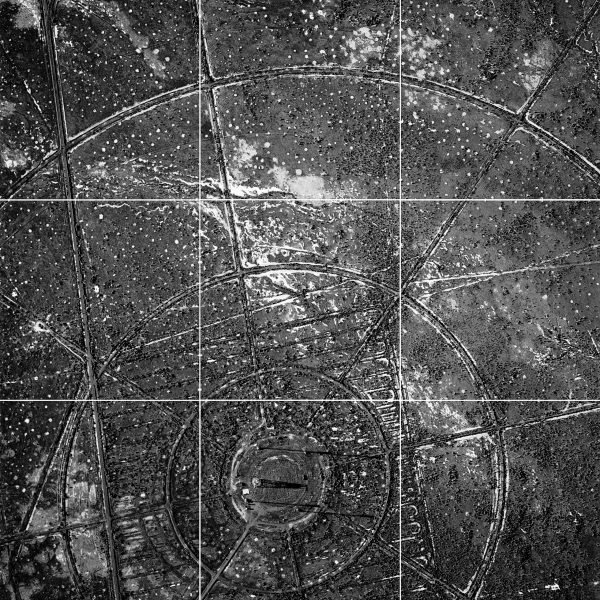
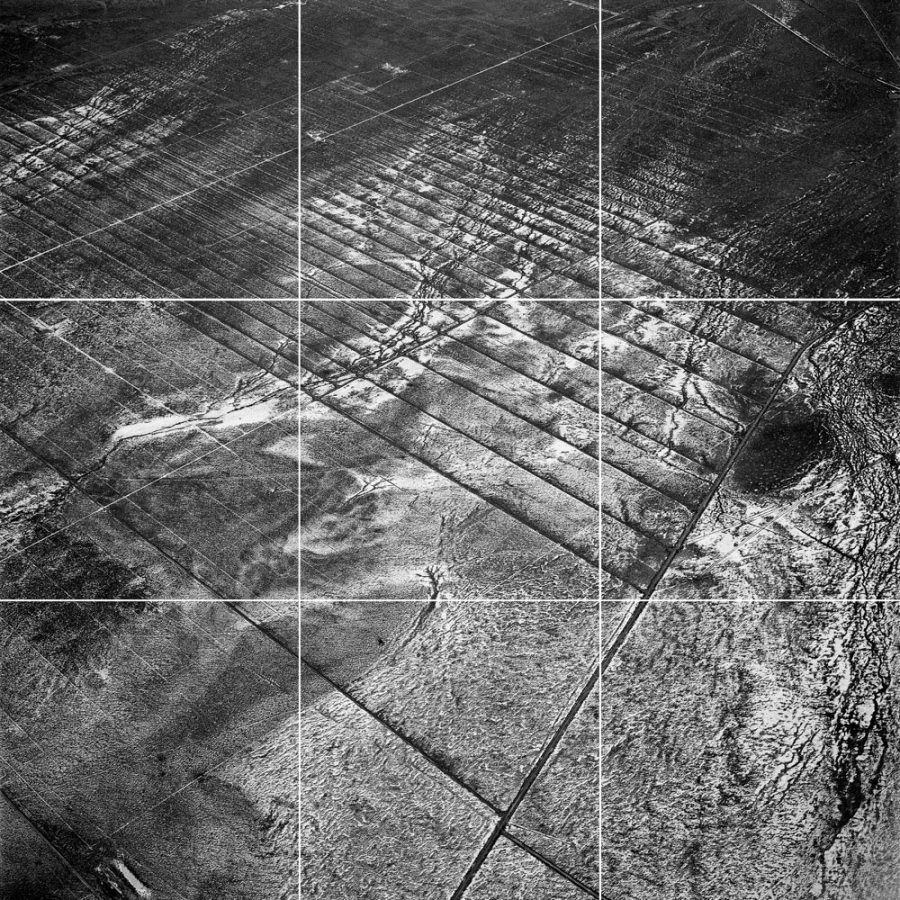
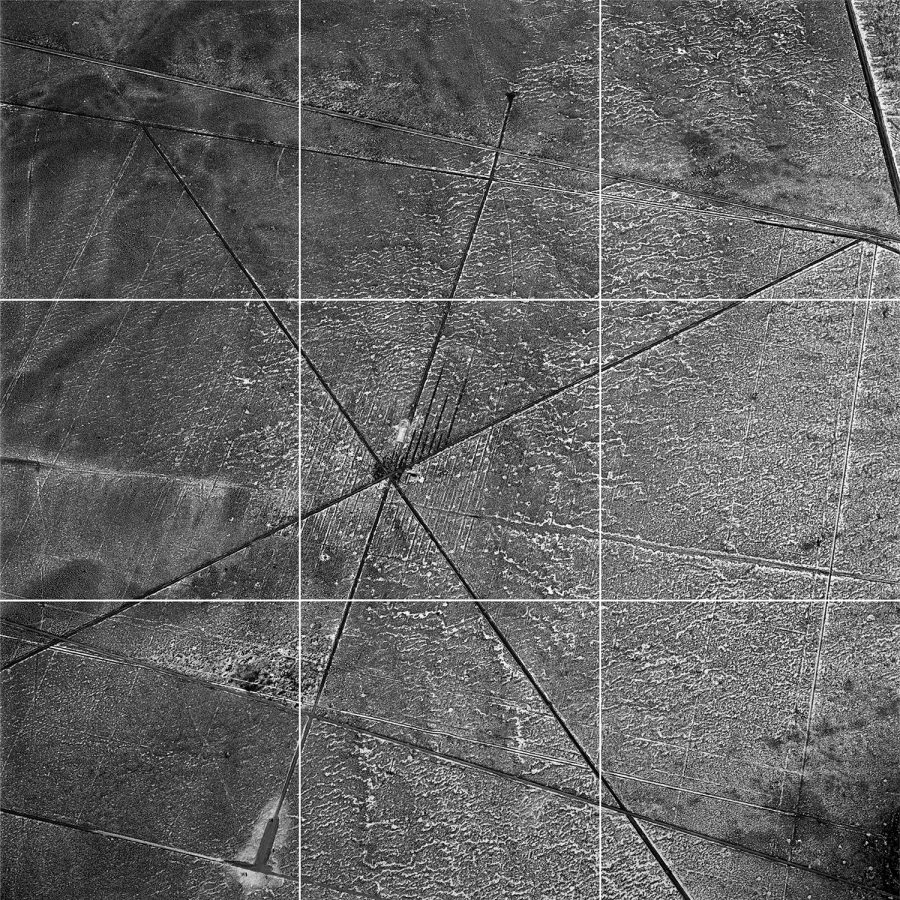
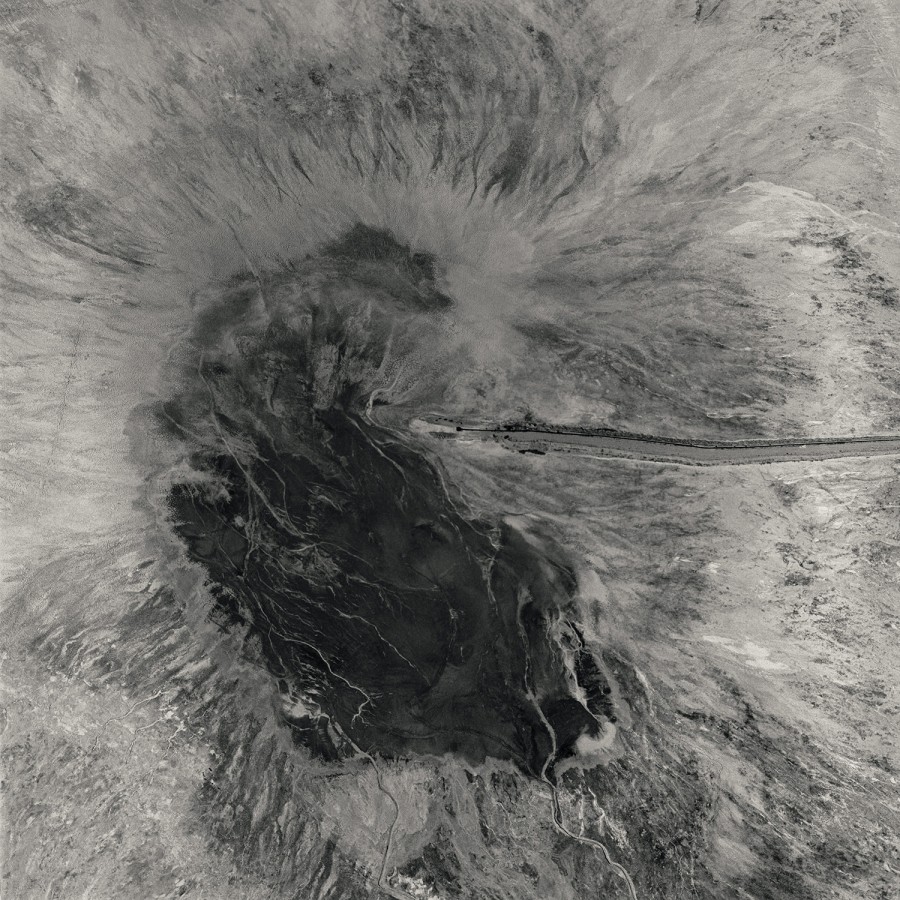
I have been inspired by Smithson to examine the “dumps of the non-historical past” by making aerial images at sites that have undergone some intense cataclysmic transformation. In The Lake Project, for example, I made aerial photographs at the site of the deracinated site of Owens Lake, drained to bring water to Los Angeles. In an accompanying essay, Report from the Lake, I questioned the ability of the images to posit any definitive truth:

If this is what we are permitted to view, then what remains concealed? What has been edited? We cannot absorb what we are seeing as we see it; we are pure reflex, exposing film as the forms shift beneath us. Then is it intuition that forms the basis of this report? And is it a desire for clarity, or for obfuscation, that brings you this finite selection? Stitching together these fragmentary images doesn’t tell the story of this lake any more than an autopsy tells the life the deceased once lived. Though the facts lie here before us in these tableaux, we are inventing a fiction, and as we thread our way through it, we are drawn deeper and deeper into a maze from which escape is impossible.6


The important phenomena is always the basic lack of substance at the core of the ‘facts’.”

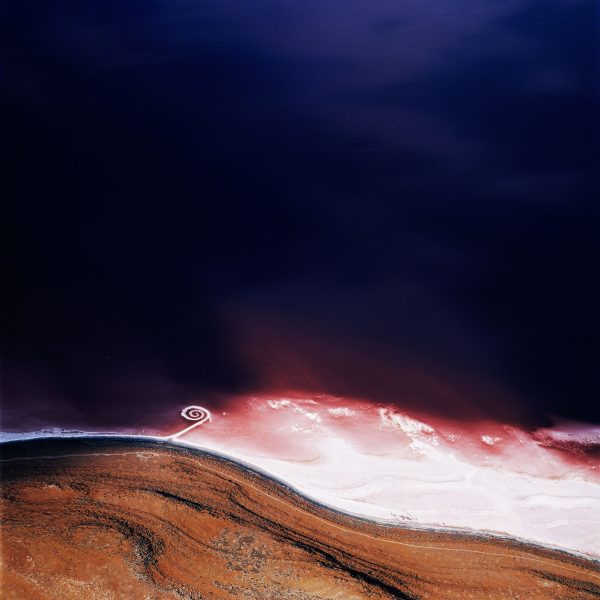
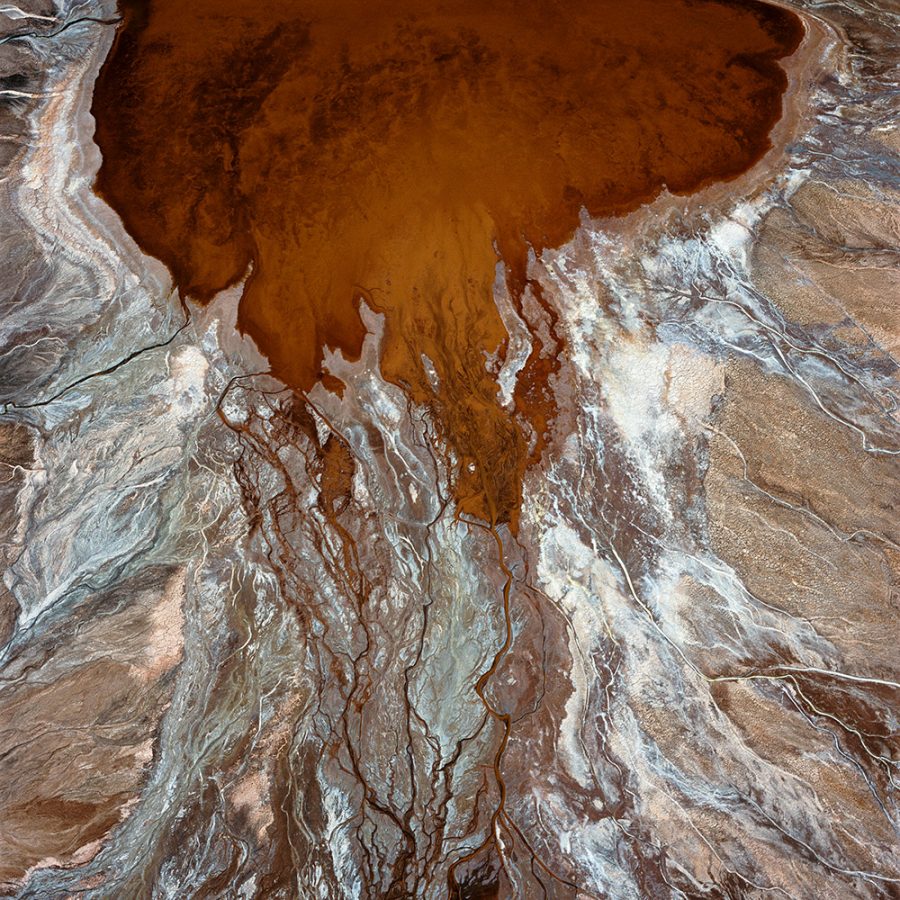
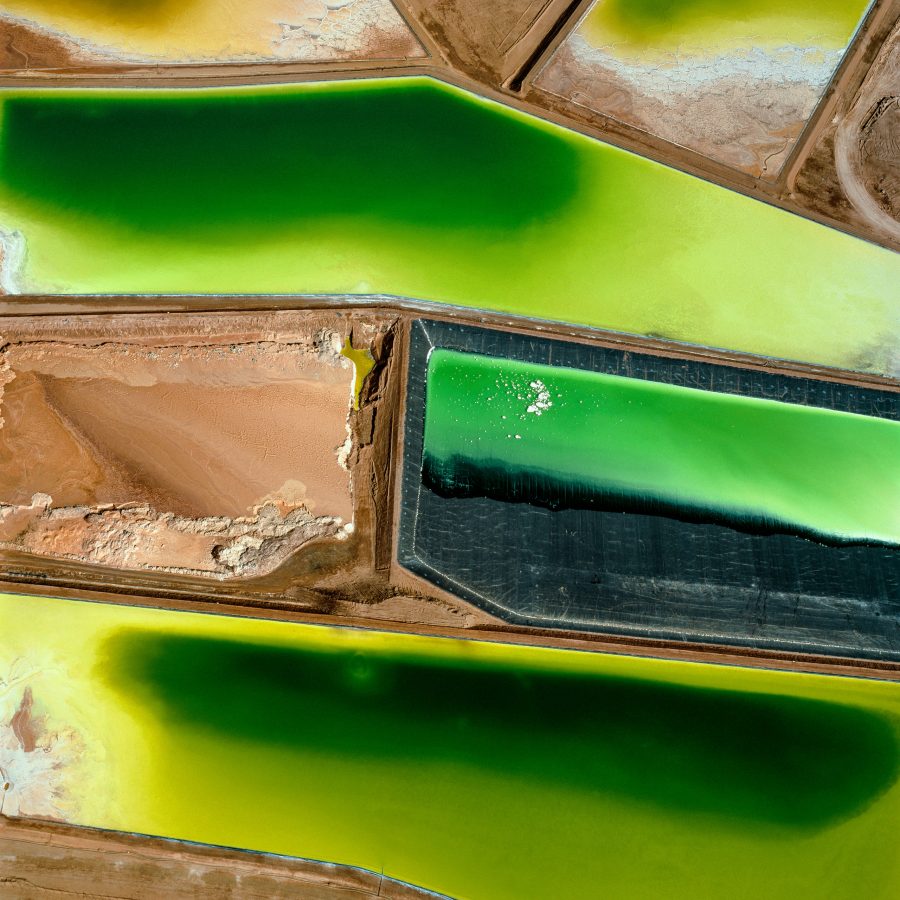
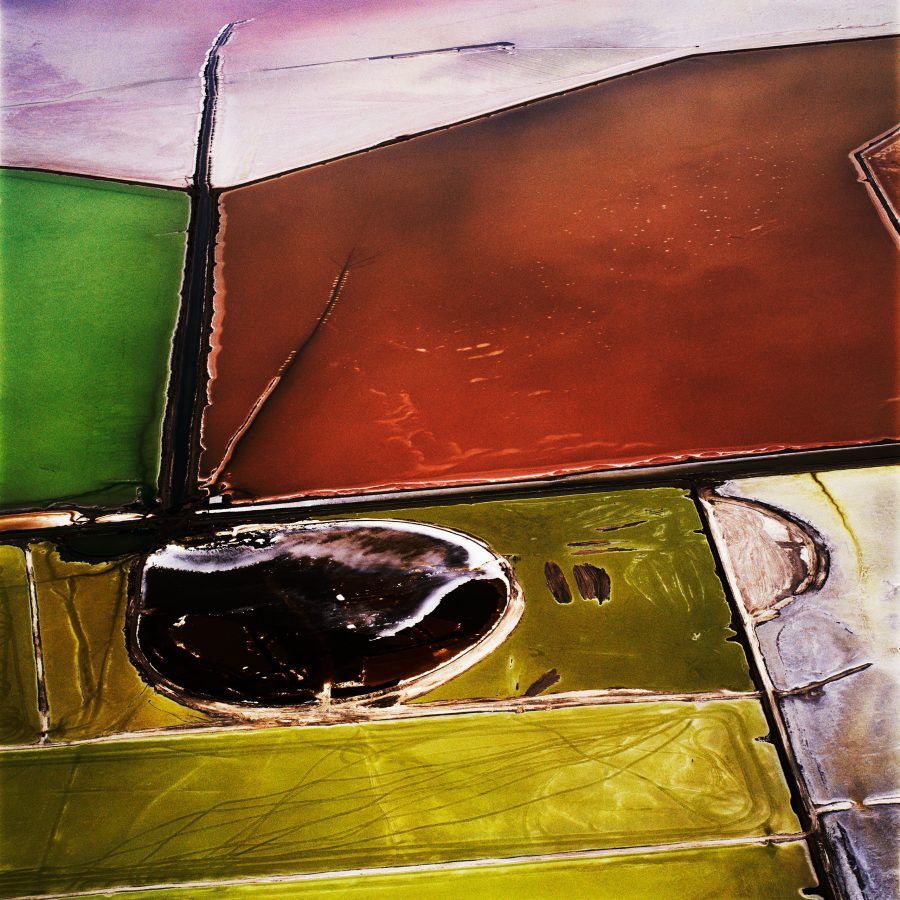
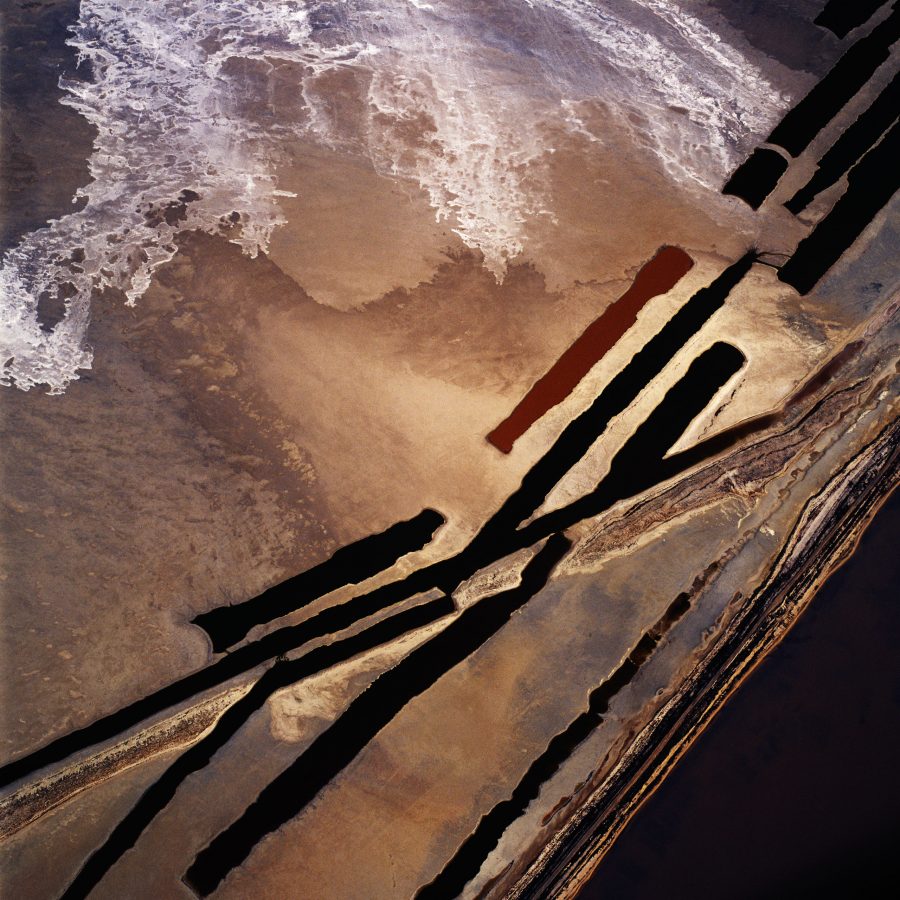
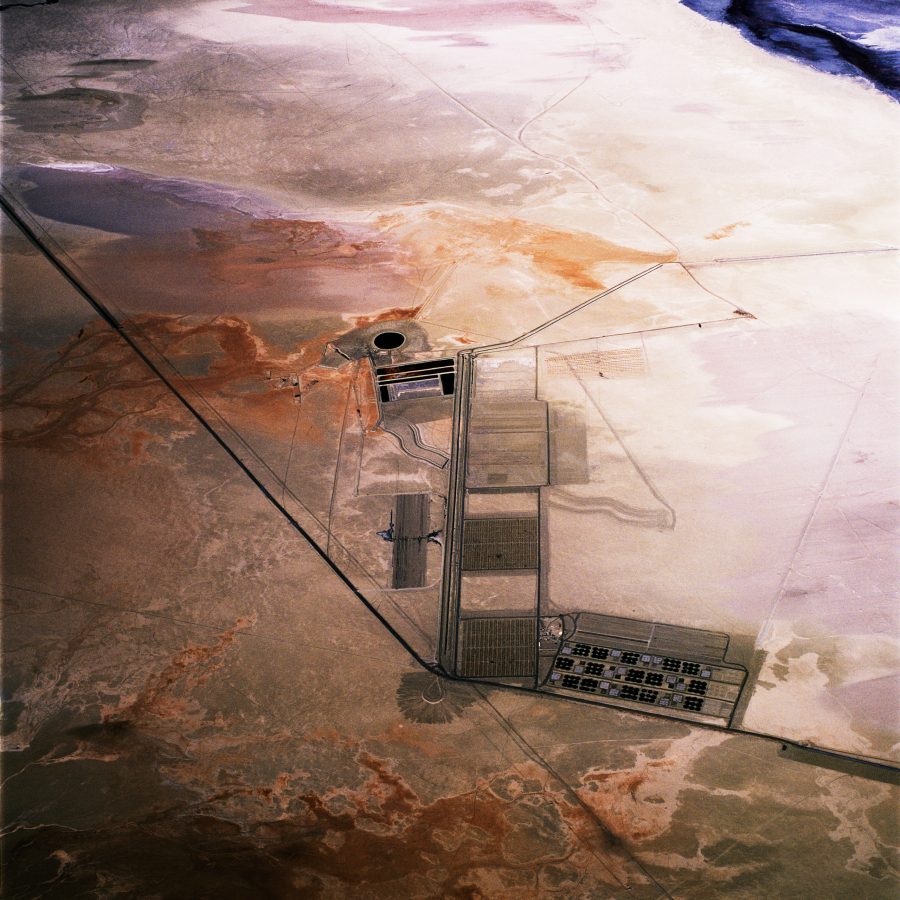
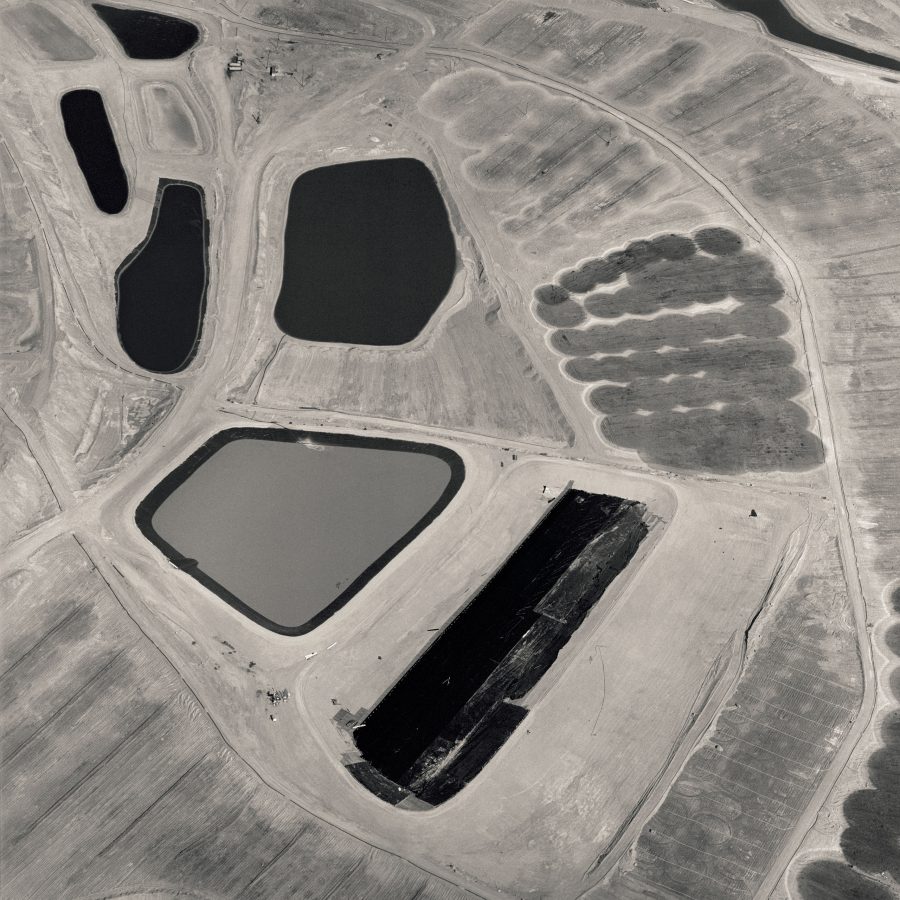
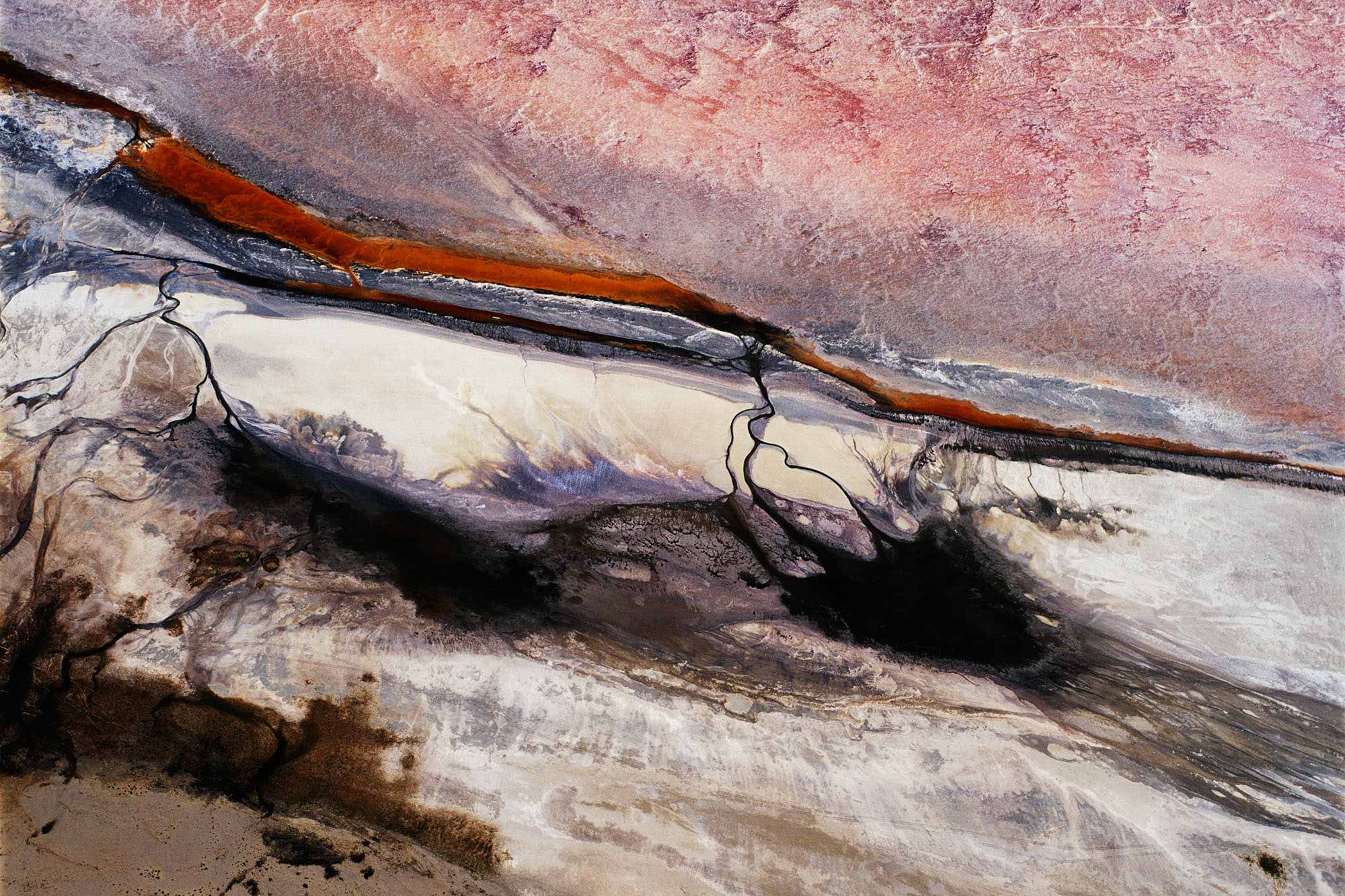
Smithson drolly and sardonically uses the terminology and lexicon of geology to describe the process of thinking about earth projects. More tellingly, he writes that “A bleached and fractured world surrounds the artist. To organize this mess of corrosion into patterns, grids, and subdivisions is an aesthetic process that has scarcely been touched.”7 In a sense, my practice has taken up this notion- of organizing such sites of corrosion by photographing them from above. In Terminal Mirage, a body of work inspired by Smithson’s writings on the Great Salt Lake, I’ve sought out gridded sites around the periphery of the lake- among the thousands of acres of evaporation ponds, amidst the military zone of the Tooele Army Depot that houses and burns expired chemical weapons.

Terminal Mirage is also concerned with the limits of rational mapping- an area explored in Smithson’s early sculptural works. These sculptures appear, at first, to derive their austere object-like forms from the Minimalist canon. Indeed, Smithson did ally himself with such artists as Andre, Morris, LeWitt, and Flavin; he wrote about them in Artforum in 1966, and his work was exhibited alongside theirs. However, Smithson’s forms evolved not from concerns linked to a Minimalist “paring down,” but to a “building up” -of forms, of systems, of methods of logic. His fascination with crystallography, mapping, and perception led, when fused, to exponentially deduced forms, as in the Alogon series (series #1, #2, #3, 1967). The pieces expose Smithson’s concern with the limits of logic: the additive logic of crystal’s repetitive forms and that of Renaissance perspectival mapping results in a third system whose physicality warps the “real” space of the gallery, making it seem illusionistic.

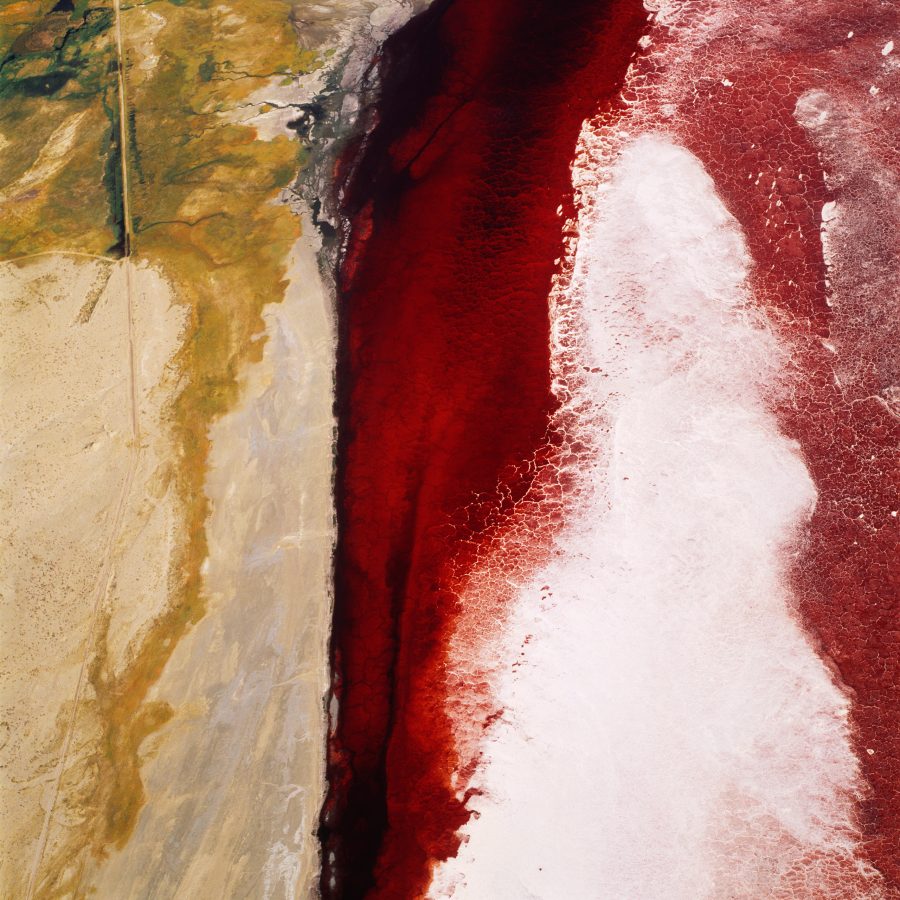
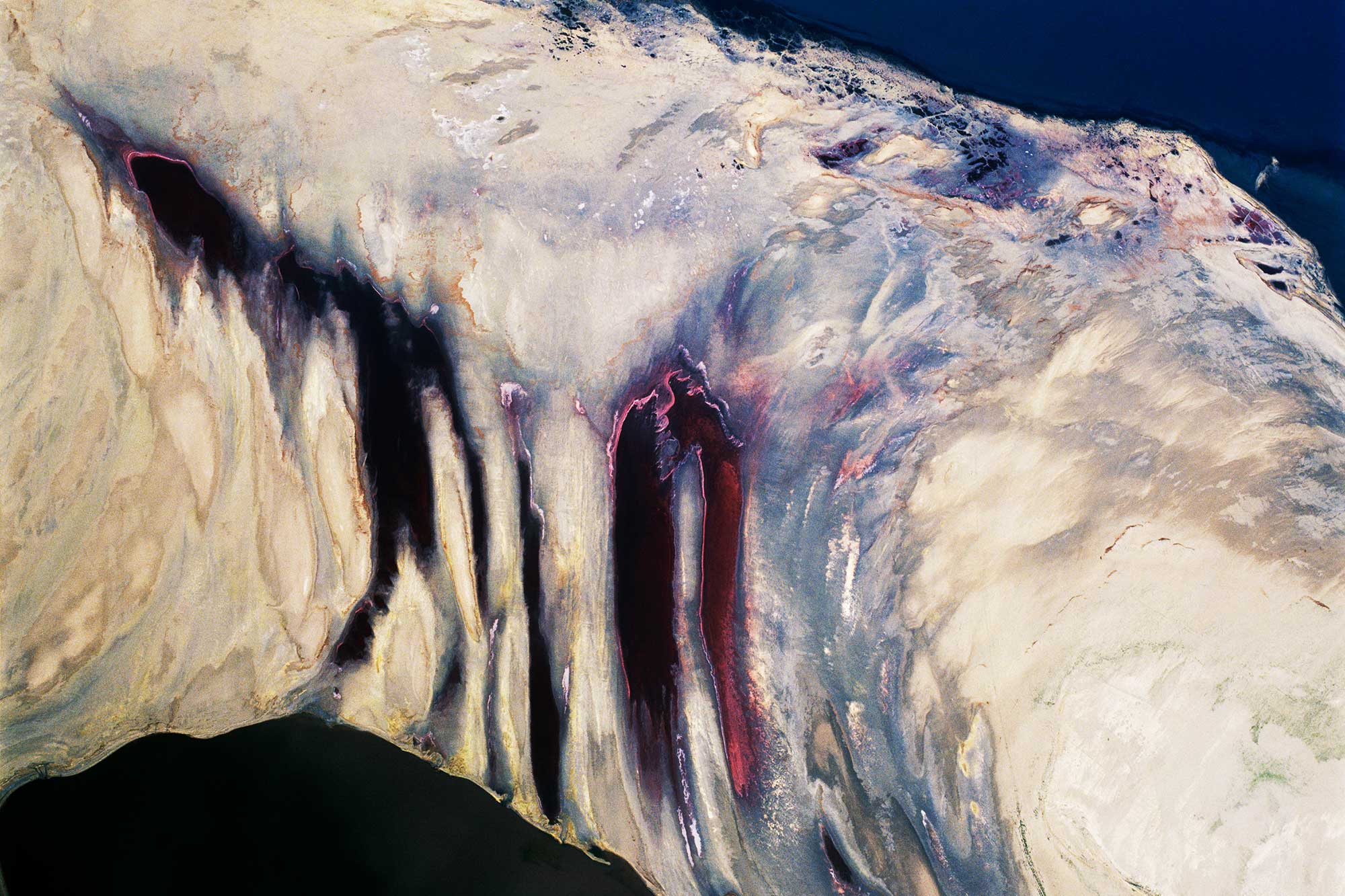
The crystalline structure as derivative form proposes a measurability of matter that is then cancelled out. In a similar vein, my images of the salt flats and the areas where salt has leached out of the blood-red waters has no measurable, quantifiable aspect to them. There is no scale reference in the images, and the “facts” of the photographs become instead a series of dizzying tropes. The grids of evaporation ponds are a kind of transgressive architecture, a labyrinth laid endlessly over the surface of the lake and its shoreline. The project Terminal Mirage gets its name from the fact that the Great Salt Lake is, indeed, a terminal lake, with no natural outlets. The claustrophobic, no-exit, existentialist aspect of this fact sparked my curiosity. And the word mirage seems to describe the entire hallucinatory quality of the expanse of the Great Salt Lake, the unflinching light that illuminates it and that is reflected from its surface, and the manner in which this body of work questions the nature of sight and perception.

A repeating element of both the Terminal Mirage images and my earlier Lake Project images is the terrifying blood-red waters common to both sites, whose color is produced by blooms of salt-loving bacteria called halobacteria. Confronting this red water at Rozelle Point, the site of his Spiral Jetty in the Great Salt Lake, Smithson hallucinated that he was being absorbed into the primal elements. He wrote,

My sight was saturated by the color of red algae circulating in the heart of the lake, pumping into ruby currents, no they were veins and arteries sucking up the obscure sediments. My eyes became combustion chambers churning orbs of blood blazing by the light of the sun. All was enveloped in a flaming chromosphere.

My images of the Great Salt Lake serve to delineate these atavistic landscapes. In writing about JG Ballard, the critic Colin Greenland has written: “Whatever the exact nature of the catastrophe, it has disrupted the continuity of history and left a world of arbitrary fragments from which the survivors must piece together their own realities.” The arbitrary fragments are my photographs of this terra incognita.


“What the artist seeks is coherence and order- not “truth,” correct statements, or proofs. He seeks the fiction that reality will sooner or later imitate.”

With Smithson’s Pours, the site-specificness of a work, as adumbrated through the earlier Site/Nonsites, is fully manifested. In Asphalt Rundown (Rome, Italy, 1969) a truckload of asphalt was pored down an eeroded hillside in an abandoned section of a gravel quarry. All that results for the art audience is the documentation of this action and Smithson’s writing on the piece. This work takes the modern space/time of highway travel (to which Smithson frequently refers in his writing) and immobilizes it into a static condition of entropy. Smithson continues to appropriate non-aesthetic materials and format of presentation in his Glue Pour (Vancouver, 1970) and Concrete Pour (Chicago, 1970).

This fall I completed a public art project that took the form of a dozen billboards around San Francisco. Each billboard contained a full-bleed photograph of Owens Lake, along with text that posited “Unaltered Photograph,” and gave the date and site of its origin. I also created a website, www.lakeproject.org, which was listed on the billboards. In addition, each billboard contained a list of chemicals: cadmium, chromium, aluminum, chlorine, etc. The billboards became a sort of non-site of the lake, referring to the lake but also falling far short from actually replicating it. Each billboard deconstructed the lake by extracting a single image from it; each billboard also sought in essence to (futilely) recreate the lake by describing its condition. The website added another layer of off-site information, with a series of 25 links to other sites that describe the history, the politics, and the environmental concerns of the lake from varying points of view- scientific, personal, journalistic, governmental. The website itself offers the possibility of sending an email back to me, under the banner: Questions and comments/ reactions and reflections/ poetry and polemic.

Smithson’s Pours demonstrate that his concern with landscape was not as a preservationist but as a dialectician. The Pours are literal instances of entropy, as Smithson begins to reclaim and proclaim wasted sites as art. It was not until Spiral Jetty (Great Salt Lake, Utah, 1970) and Spiral Hill/Broken Circle (Emmen, Holland, 1971) that issues of aesthetics and social purpose become fully intertwined. After seeing the Smithson retrospective at MOCA this fall, I was left feeling like his sculptures (many of which I’d seen before, but never gathered together) failed to engage as actively as his drawings. I felt as though I needed to begin to explore the medium of drawing, as a means to augment my practice. I’d been contemplating making a proposal for some sort of monument or place of observation or witness at the site of Owens Lake. I thought about the form of the labyrinth, and made a drawing that took the words of an essay I’d written on Owens lake and cast it into a spiral form- perhaps as a preliminary plan for a walking labyrinth to be inscribed on the lakebed’s barren surface. As Smithson stated, “The sense of the earth as a map undergoing disruption leads the artist to the realization that nothing is certain or formal.”


1   “Quasi-Infinities and the Waning of Space,” in Nancy Holt, ed., The Writings of Robert Smithson (New York: New York University Press, 1979), p.34.

2   “Entropy and the New Monuments,” in Writings, p.9.

3   “The Domain of the Great Bear,” in Writings, p.25.

4   “A Tour of the Monuments of Passaic, New Jersey,” in Writings, p.56.

5   Ibid, p.55.

6   “Report from the Lake,” in  The Lake Project (Tucson, Nazraeli Press, 2004).

7   “A Sedimentation of the Mind: Earth Projects,” Writings, p87.”


« Back to Press page